
Telephone systems for small business in Melbourne
Planning a new system or switching provider?

If you run a small business in Melbourne and the phone system is either failing you or due to be replaced, this page covers what you actually need, what changing over involves, and what it will not do.
What a small business actually needs
Most of the businesses that ring us have somewhere between three and thirty desks. At that size the honest answer is that you need less than you will be sold.
The things that matter every day are a short list. Calls reach the right person, somebody can answer from home or a second site, messages arrive somewhere they get read, and nobody has to ring a technician to change the after hours greeting.
- A menu that answers and offers options, so a call reaches the right desk without a person triaging it first
- Voicemail that arrives in an inbox as an audio file, rather than a light blinking on a handset nobody sits at
- Calls that ring a desk and a mobile together, so one advertised number works whether the person is in the office or not
- After hours and public holiday rules you set once, instead of switching the phones over by hand every Friday
- Transfers that work properly, including putting a caller straight into somebody’s voicemail without ringing their desk first
What a small office almost never needs is a call centre. Queue reporting, wallboards and supervisor tools are real features and they are worth money to a business with a phone room. On six desks they are a line on an invoice.
What changing over actually involves
This is the part people expect to be worse than it is. Nothing gets dug up, and the system you have now keeps working until the new one is proven.
- We work out what you have now, which numbers are yours, and who they currently sit with
- The new system is built and tested before anything on your desks changes
- The handsets arrive already configured. They are plugged into the network and they register themselves
- The numbers move across, which is the only step with a date attached to it
- The old service is cancelled after the new one is proven, not before
The handsets are the part that surprises people. They are set up before they are posted, so plugging one in at a desk is genuinely the whole installation. That is also why the distance between us and your office changes nothing about the work.
The step worth planning around is the number move, because it is the one with a date and the one that depends on somebody else.
Keeping the numbers you already advertise
Your numbers are yours and they move with you. That includes the number on the van, the number on the sign, and the number sitting in every directory listing you have ever been in.
The process is called porting, it is routine, and it is the one part of a changeover with a real date on it. There is more on how it works, and on what can hold it up, on our business VoIP systems page.
The thing to avoid is letting anybody talk you into a new number for now. An advertised number is an asset, and starting again with a fresh one throws away every place the old one is printed.

One phone network across more than one place
A phone system used to be tied to a building, and that is the assumption most people still bring to this. It stopped being true some time ago.
One system can cover a Melbourne office, a second site, a warehouse and four people working from home, and every one of them is an extension on the same network. Staff dial two or three digits to reach each other. A customer dials one number and never learns where anybody is sitting.
That matters most at the point you grow. Adding a person becomes a setting rather than a phone company visit, and opening a second location does not mean a second phone bill and a second system for somebody to learn.
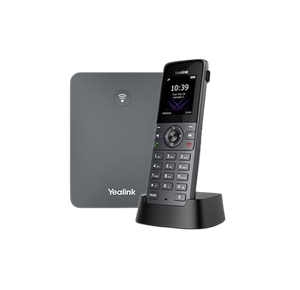
If people move around the building rather than between sites, cordless is usually a better answer than a desk phone each. The trade-offs are on our DECT and cordless page.
Do you need a phone company in Melbourne?
It is a fair question, the answer is no, and it is worth explaining why rather than just asserting it.
A phone system is configured over the internet. The handsets are posted out already set up, the call routing is built and changed remotely, and a fault is diagnosed by looking at the system rather than by looking at the phone on the desk. Almost none of that work happens inside a building.
What is genuinely local is cabling. If your office needs network points run, that is an electrician or a cabler, and it is a separate trade from the phone system whoever you buy from. A supplier down the road subcontracts it the same way we would.
So the thing worth checking is not the address on the quote. It is who picks up when you ring, and how quickly something gets changed when you ask for it.
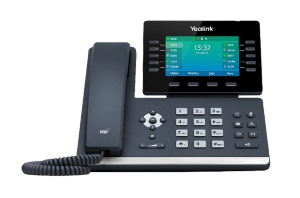
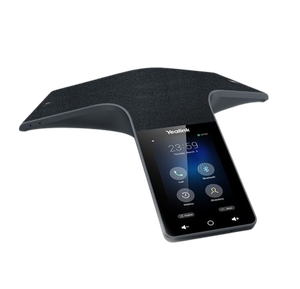
The handsets we fit most often
A desk phone, a cordless handset and a conference unit cover most offices. Prices exclude GST.
What we do, and what we are not
We are VoIP System. We install business phone systems, move numbers onto them, build the call routing and support them afterwards, for businesses across Australia.
We are not one of the manufacturers whose equipment we install, and we are not a partner, reseller or authorised agent of any of them. We work on their hardware every week, which is a different relationship and a more useful one.
That independence is the point of us. There is no quota to fill, so if the system you have is doing its job we will tell you that instead of quoting you. There is more about how we work on our about page.
Talk to us about a Melbourne office
Tell us roughly how many people need a phone, whether there is more than one location, and what you are running now. That is enough for us to tell you what would actually change and what it would cost.
Call 1300 865 879, or send us the details and we will come back to you.
Common questions
- Do you have an office in Melbourne?
- No, and we would rather say so plainly than imply otherwise. We are an Australian company working with businesses across the country from one location. A phone system is built, changed and supported over the internet, so the work is the same wherever your office is. Cabling is the one job that needs somebody on site, and that is a local trade whoever supplies your system.
- How small is too small for a proper phone system?
- There is no floor worth worrying about. Two or three people with one advertised number get the same benefit from a menu, voicemail to email and calls that follow them as thirty people do. The cost scales with the number of handsets, so a small office pays for a small office.
- Can we keep our existing phone numbers?
- Yes, in almost every case. Numbers are ported across and it is a routine process. Tell us who your numbers are with at the moment and we will tell you what is involved.
- How long does a changeover take?
- Building and testing the system is the quick part. The step with a real date on it is the number port, and how long that takes depends on whoever currently holds your numbers rather than on us. Nothing on your desks changes until the new system is proven, so the answer is rarely a day without phones.
- What happens to our calls if the internet goes down?
- Calls can be set to fall back to mobiles automatically, so the phone still rings even when the office connection does not. It is worth setting up on the first day rather than after the first outage.