
What a VoIP phone system actually costs in Australia
Want a price for your business?

Nobody will give you a price for a phone system over the internet, including us, and this page is about why that is a real answer rather than a dodge. What it does instead is set out what you are actually buying, what moves the number, and what a quote will not show you unless you ask.
Why nobody quotes a number up front
A phone system is not one product with one price. It is four purchases that happen at the same time, and the mix is different in every business.
Two offices with ten people each can differ by a large multiple, because one is keeping its handsets and moving four numbers, and the other needs twenty new phones, a reception console and eleven numbers ported off three different carriers.
So a figure quoted before anybody has asked those questions is either a starting point that will move, or it is for something other than what you need. The useful question is not what does it cost, it is what am I paying for.
The four things you are actually paying for
| What it is | How it is usually charged | |
|---|---|---|
| The system | What it isThe part that answers, routes and transfers calls | How it is usually chargedMonthly if it is hosted, a purchase if it is a box you own |
| The handsets | What it isThe phones on the desks, and any cordless or conference units | How it is usually chargedBought once, and yours, unless you are told otherwise |
| The numbers | What it isThe numbers you advertise, and any new ones | How it is usually chargedA small amount each, monthly |
| The calls | What it isWhat you actually dial out to | How it is usually chargedEither included in a plan or charged as you go |
Splitting them apart is the whole trick to reading a quote. A cheap monthly figure with the handsets buried in it is not necessarily cheap, it is a different way of paying, and whether it costs more depends on how long you keep it. Work it out across three or four years rather than per month.
What actually moves the number
In rough order of how much difference each one makes:
- How many people need a phone, which is the single biggest factor and the one nobody argues about
- Whether those people need a handset each, or can use the system from a laptop or a mobile instead
- Whether you are keeping the handsets you have, which is often possible and rarely asked
- How many numbers are moving across, and how many carriers they are currently spread over
- Whether reception needs a phone that can watch other people’s lines, because those cost more than an ordinary desk phone
What moves it less than people expect: the features. Auto attendants, voicemail to email, call queues, time based rules and call recording are included as standard on most current systems rather than sold as extras. If somebody is charging you separately for a menu, ask why.

Pay as you go, or a plan
This is the decision most people get wrong, in both directions, and it is worth about five minutes of arithmetic.
Pay as you go suits a business whose outbound calling is genuinely light: a trade business where most calls are inbound, a practice whose staff mostly answer rather than dial. Paying per minute for a small number of minutes is cheaper than a plan built for somebody else.
A plan suits a business that dials out a lot, and it buys predictability as much as it buys minutes. If your bill needs to be the same every month for a budget, that has a value of its own.
The trap is the word unlimited, which is rarely a description of anything. There is more on how the plans actually differ, and where the fine print sits, in our guide to pay as you go against unlimited and in what businesses get wrong about unlimited plans.
Whichever you pick, the number worth checking is your current bill. On older line rentals a good deal of what is billed can be rental rather than calls, and that split is worth knowing before you compare anything.
What a quote does not show you
Five questions that change the real cost and appear on almost no quote until you ask.
- What is the contract term, and what happens at the end of it?
- Do I own the handsets, or am I renting them? If I leave, what do I take?
- Is porting my numbers included, and is there a charge per number?
- What happens to the price after the first year?
- Is support included, or is it charged when something goes wrong?
The handset one is the most expensive to get wrong. Handsets last a long time, so a business that owns them starts its next change with the hardware already paid for, and a business that rented them starts again.
What you should stop paying for
This is the part that argues against buying anything, and it is usually where the money actually is.
- Line rentals for lines that no longer carry anything, which outlive the service on them surprisingly often
- Numbers you no longer advertise anywhere, still billed monthly
- An old system under a maintenance agreement that costs more each year than replacing it would
- Features on a plan nobody in the building has ever used
Take a recent bill and read it line by line before you talk to anybody, including us. Some businesses find the saving is in what they cancel rather than in what they buy, and if that is your situation we would rather tell you than sell you a system.
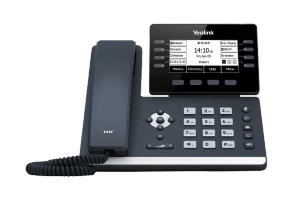
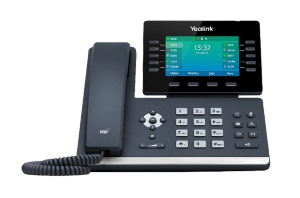
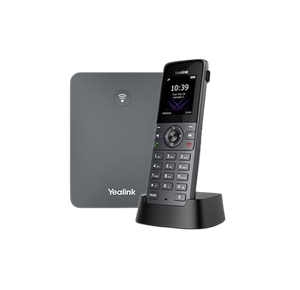
What a handset actually costs
The hardware is a one off, and these are the three we quote most. Every price excludes GST.
What we do, and what we are not
We are VoIP System, an independent Australian phone systems company. We install business phone systems, move numbers onto them, build the call routing and support them afterwards.
We are not one of the manufacturers whose equipment we install, and we are not a partner, reseller or authorised agent of any of them. There is no brand we are obliged to put in front of you and no quota to fill.
The short version of what a system does, and the two paragraph answer on cost, is on our business VoIP systems page. Whether it should live in your building or ours is on the hosted PBX page.
Getting a real number for your business
Have a recent phone bill in front of you, know roughly how many people need a phone, and know whether there is more than one site. With those three we can give you something specific rather than a range.
Call 1300 865 879, or send us the details and we will come back to you.
Common questions
- Why will nobody put a price on their website?
- Because a phone system is four purchases at once and the mix differs in every business. Two offices of the same size can differ by a large multiple depending on how many handsets are needed and how many numbers are moving. A figure quoted before those questions is either a starting point that will move or it is for something other than what you need.
- Is a hosted system cheaper than one we own?
- It is cheaper to start and it is not cheaper forever. A system you own costs more up front and less each month, and a hosted one is the other way around. The figure that matters is the total across three or four years, plus what happens to your hardware at the end.
- Do we have to buy new handsets?
- Often not, and it is worth asking before anybody quotes you a set. Handsets are standard devices and many can move to a new system. Tell us what is on the desks now and we will tell you what can stay.
- Should we take a call plan or pay per call?
- It depends on how much you dial out. A business whose calls are mostly inbound often does better paying as it goes, and a business that dials out all day does better on a plan, which also buys a predictable bill. Look at a recent bill for the answer rather than guessing.
- What is the most common thing people overpay for?
- Line rentals for lines that no longer carry anything, and numbers nobody advertises any more. Both keep billing quietly after the service on them has stopped mattering. Reading a recent bill line by line is worth doing before you talk to any supplier.