
SIP trunking for Australian businesses
Planning a new system or switching provider?
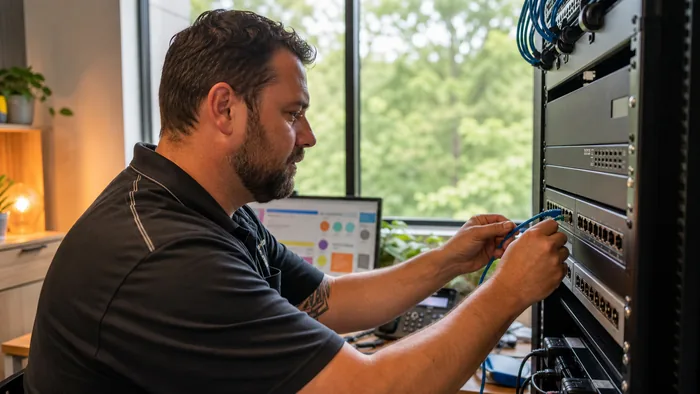
A SIP trunk is what replaced the bundle of phone lines in the wall. It connects a phone system you own to the telephone network over your internet connection. If there is a PBX in your comms cupboard and the lines it was built for are going or gone, this is the part you are actually shopping for.
This page covers what a trunk is, who needs one and who does not, how to size it, and what to check before anything is signed. We sell SIP trunks to businesses that already own their phone system, and we connect them on the systems we install.
What a SIP trunk actually is
The old arrangement was physical. Capacity arrived as copper into the building, whether that was a handful of separate lines or an ISDN service carrying several conversations at once, and adding to it meant ordering more and waiting. A SIP trunk does that job over your internet connection instead: one connection between your phone system and a call provider, carrying calls to and from the network.
Its capacity is measured in channels, and one channel is one call happening at once. Your numbers ride on the trunk. To everyone in the office it is invisible. The handsets, the extensions and the menus all behave exactly as they did, because the trunk only changes how calls leave and arrive at the building.
Who needs one, and who does not
A SIP trunk is usually the answer if you own the phone system. A Yeastar or Grandstream unit in the cupboard, a FreePBX server, a 3CX system you run yourself: the system is yours, and something has to connect it to the outside world.
If your system is hosted, there is generally nothing separate to buy, because the service already includes its connection to the network. Where the system lives, and which arrangement suits which business, is on our hosted PBX page.
On the systems we install, the same connection sits underneath Microsoft Teams as the office phone: the call arrives over a trunk, the PBX applies your rules, and the ringing happens in Teams.
Channels, and how many you actually need
Channels are the number the quote turns on, and the arithmetic surprises people, because it is not one per person. It is the number of conversations that happen at the same moment, and in most businesses that is far smaller than the headcount. Twenty people is usually a handful of simultaneous calls plus a margin for the busy hour, not twenty.
The honest way to size a trunk is to measure rather than guess. What your current system or your bill shows about overlapping calls is the number that matters. On most services channels can be added later as the business grows, so ask whether yours can before buying today for the size you might be in three years.
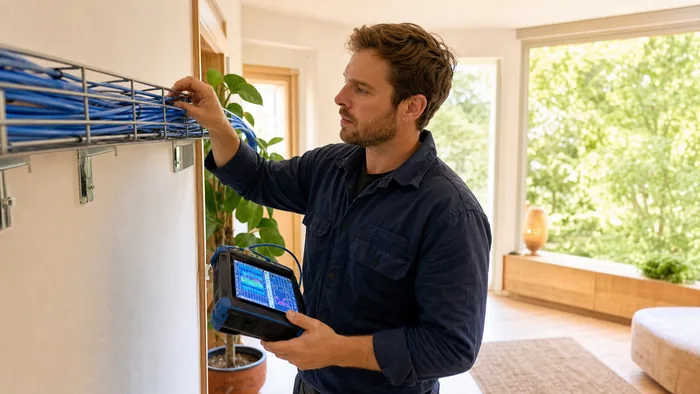
Coming off ISDN, and what your PBX can cope with
The copper services that used to feed a PBX, ISDN among them, have been progressively switched off as the NBN rolled through. A system that expected those lines usually has two paths forward: connect straight to a SIP trunk, if it is recent enough to speak SIP, or work behind a gateway that translates between the trunk and the older connections it was built for.
Which path yours can take depends on its age and model, and it is the thing to have checked before anything is signed, because the answer is sometimes that the system is past it. Whether the system you already own can stay at all is the subject of our NBN phone systems page.
Your numbers ride the trunk, and they stay yours
The numbers on your vans, your signage and your website are carried on the trunk, and they are not welded to it. In almost every case numbers port between providers, so changing trunk provider does not mean changing numbers, and no quote should quietly assume otherwise.
The thing worth insisting on in any trunk quote is that your existing numbers move rather than new ones being issued for convenience. How porting works, and what can hold it up, is on our business VoIP systems page.
Call quality, and what actually decides it
A voice call is a small, steady trickle of data. What it needs from your internet connection is steadiness, not speed, so when a trunk sounds bad the connection is the first suspect, the router configuration the second, and the trunk itself usually the last.
The unglamorous details decide the experience: whether the router gives voice priority over a big download, and whether the firewall lets the whole call through rather than half of it. Both are set once, properly, when the trunk is connected. If a supplier does not bring them up, ask.

What we do, and what we are not
We sell SIP trunks to businesses that already own their phone system, and we connect them on the systems we install and support. Either way the work is the same: size the channels honestly, move the numbers and build the routing. If your current lines are doing their job we will say so.
Trunks are priced by the number of concurrent calls you need rather than by headcount, with line rental for each number you keep. Tell us how many calls have to run at once and which numbers have to survive, and we will price it.
We are not one of the manufacturers whose equipment we install, and we are not a partner, reseller or authorised agent of any of them.
Before you ask us about a trunk
Three things shortcut the first conversation: what phone system you have, roughly how many calls overlap in your busiest hour, and which numbers have to survive the move. A photo of the unit in the cupboard answers more than most spec sheets.
If the jargon is the obstacle, there is a plain language comparison in VoIP vs SIP, what the difference is and why it matters and a gentler walk through trunks themselves in understanding SIP trunks.
Call 1300 865 879, or send us the details and we will come back to you.
Common questions
- Is SIP trunking the same thing as VoIP?
- They are related but not the same. VoIP is the general idea of calls travelling over the internet. A SIP trunk is the specific connection that joins a phone system you own to the telephone network. If your system is hosted, you are generally already using VoIP without ever needing to think about trunks.
- Can we buy a SIP trunk from you without changing our phone system?
- Yes. If you own a PBX and it can speak SIP, we can supply the trunk and connect it while everything else stays where it is. Trunks are priced by the number of concurrent calls you need rather than by the number of people in the office, with line rental for each number you keep.
- How many channels should we buy?
- Count conversations, not people. The number that matters is how many calls happen at the same moment in your busiest hour, plus a small margin. That is usually far below the headcount, and on most services channels can be added later, so there is rarely a reason to pay for capacity the business does not use yet.
- Can we keep our numbers if we change trunk providers?
- In almost every case, yes. Numbers port between providers and they are not tied to the trunk they currently ride on. It is worth insisting on in any quote, because being issued new numbers for convenience quietly throws away everything printed on vans, signs and directories.
- Our PBX is old. Can it still use a SIP trunk?
- It depends on the age and model. Some connect directly, some need a gateway in front of them to translate, and some are honestly past it. We will tell you which yours is before you spend anything on it.
- What happens to calls if the internet goes down?
- The trunk becomes unreachable, but the numbers do not have to go silent. Most services can redirect calls to mobiles when the trunk stops answering, so ask for that to be set up on day one rather than discovering after the first outage that nobody arranged it.