
Business phone systems in Sydney
Planning a new system or switching provider?

If you are looking at phone systems for a Sydney business and have not yet settled on what kind you want, start here. There are three real options, they suit different businesses, and the difference between them is not what the brochures lead with.
The three kinds of business phone system
Almost every quote you will be shown is one of three things. Working out which one you are looking at is more useful than comparing feature lists, because the feature lists are nearly identical.
| Hosted | On your premises | Keeping what you have | |
|---|---|---|---|
| What it is | HostedThe system runs in a data centre and you pay to use it | On your premisesA box in your comms cupboard that you own outright | Keeping what you haveYour existing system, connected to a modern service |
| What it costs | HostedA monthly amount, usually per handset | On your premisesA purchase up front, then support | Keeping what you haveUsually the least, until the day it stops |
| Who fixes it | HostedYour supplier, remotely | On your premisesYour supplier, sometimes on site | Keeping what you haveWhoever still understands the system |
| Adding a person | HostedA setting | On your premisesDepends on the capacity you bought | Keeping what you haveOften a hardware limit you cannot move |
| Who it suits | HostedMost small and medium offices, and anyone with more than one site | On your premisesA single site with good internet and somebody technical on staff | Keeping what you haveA system that is doing its job and is still supported |
How to tell which one you are being sold
Suppliers rarely say "this is a hosted system". They say cloud, virtual, managed, or just our system. Three questions settle it.
- Where does the system itself run? In a data centre, or on hardware in my building?
- Do I own anything at the end of this, or am I paying to use it?
- If I leave in two years, what do I take with me?
The last one is the useful question. The answer tells you what you are actually committing to, and it is the one suppliers answer least comfortably.
Questions worth asking whoever quotes you
These are the ones that separate two quotes that look identical on paper.
- Are my numbers being ported, or am I being given new ones? A new number for an established business is a real cost that never appears on a quote
- What is the contract term, and what happens at the end of it?
- Who do I ring when something is wrong, and what hours does somebody answer?
- Is the handset mine, or am I renting it?
- What happens to calls if the internet goes down?
- Can I change the after hours message myself, or is that a support request every time?
The last one sounds minor and it is not. A system you cannot change without asking somebody is a system you will quietly stop changing, and then it stops matching how you actually work.

AI answering services, and whether yours should include one
This is being added to quotes at the moment, so it is worth knowing how to read it. Whether it belongs in yours comes down to one question, and it is not a technical one: what happens to a call today when nobody picks it up?
If it goes to voicemail and the caller does not leave one, you are losing work you have already paid to win, and something answering is better than nothing. If somebody in the office picks up on the second ring, this is a line on a quote you do not need, and a supplier who cannot tell you which of those two you are does not know enough about your business to be quoting you.
Two things to check on any quote that offers it:
- Is it actually an AI answering service, or an auto attendant with a new name on it? A menu that asks the caller to press one is built into most current systems. Software that listens to what the caller says is a different thing, and the two are quoted at very different levels.
- What happens when it cannot help? Ask to hear that part demonstrated rather than described. Almost every bad experience callers have with an automated answer is about the handover to a person, not about the software.
There is a full account of where these earn their place, where they do not, and what to settle before switching one on, on our AI answering services page.
Keeping the numbers you already advertise
Your numbers are yours and they move between suppliers. That includes the number on your vehicles, the number on your signage, and years of directory listings pointing at it.
The process is called porting and it is routine. It is also the one step in a changeover with a real date attached to it. There is more on how it works on our business VoIP systems page.
Be wary of any quote that quietly starts you on a new number. It is the cheapest thing for a supplier to do and the most expensive thing for you to absorb.
Do you need a phone company in Sydney?
Sydney is not short of phone suppliers, so the question comes with a long list attached. It deserves an honest answer.
Many of them are resellers of the same handful of systems rather than phone companies in their own right. Which means the thing you are really choosing between is not the technology, it is who supports it and how.
Support is often not local either. A Sydney address can mean a sales office in Sydney and a support desk somewhere else entirely. We are simpler than that and we would rather say so: one location, no sales office anywhere, and no Sydney address to put on this page.
What actually matters is who answers, how quickly a change gets made, and whether anybody will tell you when you do not need the upgrade. None of those three is an address.
The handsets we fit most often
A desk phone, a cordless handset and a conference unit cover most offices. Prices exclude GST.
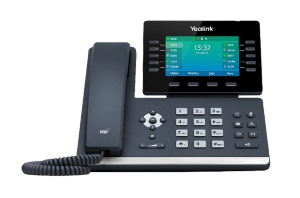
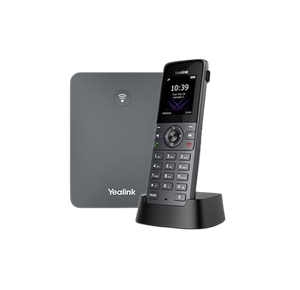
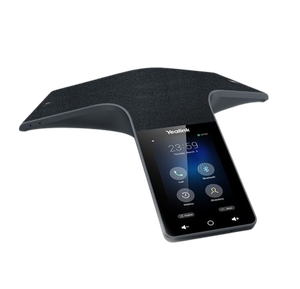
What we do, and what we are not
We are VoIP System, an independent Australian phone systems company working Australia wide from one location. We install business phone systems, port numbers onto them, build the call routing and support them afterwards.
We are not one of the manufacturers whose equipment we install, and we are not a partner, reseller or authorised agent of any of them.
What that buys you is an opinion with nothing riding on it. If you already have a system and only want somebody to look after it properly, that is a service on its own, on our outsourced VoIP support page.
Talk to us about a Sydney office
Tell us how many people need a phone, how many sites they are spread across, and what you have at the moment. That is enough for us to tell you which of the three above you are actually looking at.
Call 1300 865 879, or send us the details and we will come back to you.
Common questions
- Do you have an office in Sydney?
- No. We work Australia wide from one location. Phone systems are configured and supported over the internet, so the work happens the same way wherever the office is. We would rather say that plainly than put a Sydney address on the page.
- Which of the three kinds is cheapest?
- It depends on how many desks you have and how long you keep it. A system you own costs more up front and less each month. A hosted system is the other way around. The figure that matters is the total across three or four years, not the one at the top of the quote.
- Can we keep our existing numbers?
- Yes, in almost every case, and it is worth insisting on. Numbers are ported between suppliers as a matter of routine, and losing one you have advertised for years costs far more than the port does.
- Is the handset ours, or the supplier’s?
- Ask, because it varies and it is rarely stated clearly. It decides what you are left holding if you change supplier, and it is one of the few things on a quote that is genuinely hard to find out later.
- How do we compare two quotes that look the same?
- Put the questions above to both of them and compare the answers rather than the feature lists. Contract term, number porting, who owns the handsets and who answers the phone are where two identical looking quotes usually turn out to differ.
- We have been quoted for an AI answering service. Do we need one?
- Ask yourself what happens to a call now when nobody picks up. If it goes to voicemail and the caller does not leave one, something answering is better than nothing. If somebody answers on the second ring, it is a line on a quote you do not need. Also check whether what you have been offered is an AI answering service or an auto attendant menu under a different name, because most current systems have the second one built in.