
Phone systems for small business
Planning a new system or switching provider?
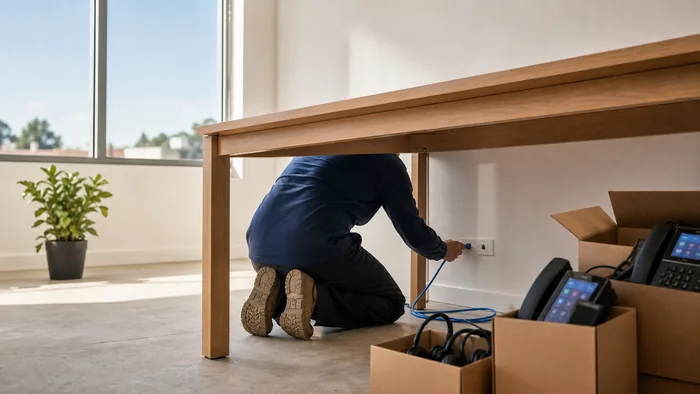
Most small businesses are sold more phone system than they need, and then judged on how much of it they use. The useful question is not which system is best. It is how many people have to answer a phone, and what happens to a call when the one who normally does is already on another one.
This page is about that decision for a business of a few people up to about forty. If you already know what you want, ring us and skip it.
The size of the business changes the answer more than anything else
Three or four people. You need calls to reach whoever is free, and to follow somebody out to a job. That is a handset each, or often no handsets at all and an app on the phone in your pocket. Anything more is being sold something.
Five to fifteen. This is where a call being missed starts costing real money, because the person who used to catch everything is now busy. You want calls to ring in an order, an after hours path that is not just voicemail, and somebody able to change it without raising a ticket.
Fifteen to forty. Now it is about who owns the phones. The system matters less than whether one person understands it. Most of the bad phone systems we are called out to were fine on the day they went in, and nobody has been able to change them since.
What you actually need, and what gets added on
Almost every small business needs these four things and is rarely sold them plainly.
- Calls that reach a person, in an order you chose, without a menu for a business with six staff
- The number you already advertise, kept, and moved without a day of silence
- A way to answer from a mobile that does not show your personal number
- Somebody who changes it when you ask, in a reasonable time
What gets added on top is usually call recording nobody listens to, analytics nobody opens, and a licence tier for features that suit a call centre. None of it is dishonest. It is just sold by the seat, and a small business pays for it by the seat.
The changeover week, which is the part people actually worry about
Moving a phone system is not a switch being flipped. The part with any risk in it is the number, because that has to move between carriers and that runs on their timetable rather than ours.
What that means in practice: the new system is built and tested while the old one is still running, the handsets arrive configured, and the number moves last. If the move is going to be slow, you find out before anything is committed rather than on the morning.
The comparison with what you have now, if it is still a traditional line, is on VoIP against traditional phone lines, and how a hosted system is put together is on hosted PBX.
The three things that actually go wrong
In the order we get called about them.
- The internet, not the phones. Voice is unforgiving about interruptions in a way that email is not, so a connection that feels fine for browsing can still break up calls. This is worth checking before you change anything, not after
- The number. Somebody switches provider, the number is still with the old one, and nobody notices until a customer says they could not get through
- Nobody owns it. The system works and then somebody leaves, and a year later nobody can add a handset. That is not a technology problem and no system prevents it
What a bad decision costs, which is not the monthly bill
The monthly figure is the smallest number in this. What costs more is a missed call from somebody who then rings the next result down, and it is worth knowing that the phone bill on its own is rarely what makes a change worth doing. The pricing detail sits on what a phone system costs rather than here, because it deserves the whole page and it changes.
If you would rather read than talk
Three we would point a small business at first, out of everything on this site.
What it costs, with the numbers rather than a range: how much a small business phone system costs in Australia.
Whether it is worth doing at all: is VoIP worth it for small businesses in Australia.
The features that earn their place, and the ones that do not: ten features every small business phone system must have.
Who we are, and what we are not
We are VoIP System. We design, install and support business phone systems across Australia, and a person answers when you ring. We are not Yealink, Grandstream, Yeastar or 3CX, and we are not one of their partners, resellers or authorised agents, which is why this page argues about size and ownership rather than about a brand.
Tell us how many people answer a phone and what is not working now, and we will tell you what we would put in. Call 1300 865 879 or send us the details.
Common questions
- What is the best phone system for small businesses in Australia?
- There is no single best one, and any page that names one is usually selling it. What decides it is how many people answer a phone, whether they sit at desks or move around, and whether anybody in the business will own the system afterwards. For most businesses under about forty people a hosted system is the right shape, and the difference between the good and bad outcomes is the setup and the support rather than the brand on the handset.
- What is the best phone service for a small business?
- The one that keeps the number you already advertise, reaches a person rather than a menu, and can be changed by a phone call rather than a ticket. Those three matter more day to day than any feature list. Ask any provider how a change gets made and how long it takes, because that is what you will actually live with.
- How many handsets does a small business need?
- Fewer than most quotes assume. Count the people who have to answer an incoming call at a desk, not the people who have a desk. Anybody who is mostly out, or who only makes calls, is usually better with an app on the mobile they already carry. It is common to halve a handset count this way without anybody noticing a loss.
- Can we keep our existing phone number?
- Almost always, and it is the part worth getting right because the number is what you have advertised for years. It moves between carriers on their timetable rather than ours, so the new system is built and tested first and the number moves last. If a move is going to be slow, you should be told before anything is committed.
- Do we need an on site phone system, or a hosted one?
- For a small business, almost always hosted, because there is no hardware in a cupboard to fail and no one person who has to understand it. On site still makes sense in specific cases, usually where the internet is genuinely unreliable or a building already has wiring worth keeping. How the hosted kind is put together is on our hosted PBX page.
- What happens to our phones if the internet goes down?
- Calls stop reaching the handsets, and what matters is what happens next. A system set up properly diverts to mobiles automatically, so the business keeps answering while the connection is fixed. That is a setting somebody has to have configured in advance, and it is one of the first things worth asking about rather than discovering during an outage.