
Phone systems for law firms and chambers
Planning a new system or switching provider?

For a law firm the phone is a confidentiality surface before it is anything else, and a record of who spoke to whom and for how long is worth money. This page covers both, and what happens when the person a client wants is in court.
Confidentiality starts at the switchboard
Most thinking about client confidentiality is about documents. The phone gets less attention and it leaks in more ordinary ways.
- A call transferred to a speakerphone in a room with other people in it
- A voicemail about a matter sitting in a shared inbox that several people can read
- A caller left on hold on a handset in a reception area where the waiting room can hear one side of it
- A number diverted to a personal mobile that somebody else in the household answers
None of those is a technology failure. They are arrangements nobody chose, inherited from whatever the phones did before. The value of setting a system up properly is mostly in deciding these deliberately.
Recording a call, and the part we will not advise you on
Whether you may record a call, and on what terms, is not a question for your phone supplier. The rules differ between states, they are not uniform, and we are not the people to be telling you which applies to your firm. Ask somebody qualified.
What we can tell you is exactly what the system will do once you have decided.
- Recording can be off entirely, or on for some extensions and not others
- An announcement can play at the start of a call so nobody is recorded without being told
- Recording can be started by hand on a particular call rather than running all the time
- Access to what has been recorded can be restricted to named people rather than everyone
The mistake worth avoiding is inheriting a setting. A system that came with recording switched on because that was the default is a decision nobody made.

A call that belongs to a matter, not to somebody’s mobile
When a client rings a mobile number directly, that conversation exists only in one person’s memory. There is no record of it, no time against the matter, and nothing for anyone else in the firm to pick up if that person is away.
A call through the firm’s system leaves a record: who called, when, how long it lasted, and which extension took it. That is the raw material for time recording, and it is the difference between billing a call and remembering one.
Where the system connects to the software the firm already runs, the call can be logged against the client automatically and the record can be on screen before anybody says hello.
Whether your own software connects is a real question with a real answer, it varies a great deal between products, and it changes over time. Tell us what you run and we will check it properly rather than guess.
When the person they want is in court
Legal work has a particular pattern: the person a caller wants is regularly unreachable for hours at a time, and the caller often will not accept anybody else.
What helps is being honest with the caller quickly rather than making them find out slowly. A direct number that goes to a mailbox with a real message on it beats a switchboard that tries four times and then apologises.
- Direct numbers, so a client reaches the right person or their mailbox rather than the front desk
- Rules that send calls to a mailbox during court hours instead of ringing out
- A mailbox that reaches the person by email, so a message left at eleven is read at lunch rather than at six
- A second name on the matter who can be reached when the first cannot, set deliberately rather than improvised
The enquiry that rings once
New client enquiries often do not ring twice. Somebody who has decided they need a lawyer today is usually working down a list, and the firm that answers is the one in front of them.
That makes the new enquiry line worth treating differently from everything else. It is worth answering ahead of the queue, worth having a second person it reaches when the first is busy, and worth being able to see how many came in and how many were missed.
Most firms have never seen that number. It is usually the most interesting thing a new phone system tells them in the first month.
Desk phones and a meeting room unit
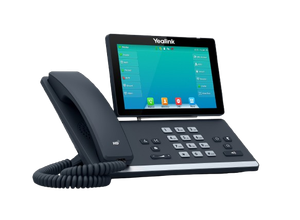
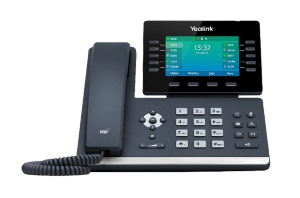
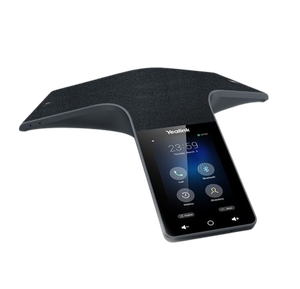
Enough line keys to see who is free before you transfer a client, and a conference unit for the room where the matter gets discussed. Prices exclude GST.
What we do, and what we are not
We are VoIP System, an Australian phone systems company. We are independent of every manufacturer whose equipment we fit, which is most of what makes our opinion worth having.
We are not lawyers and nothing here is advice about your obligations. We are the people who make the phone do what you have decided it should do, and who will tell you plainly when it cannot.
We are not one of the manufacturers whose equipment we install, and we are not a partner, reseller or authorised agent of any of them. If you already have a system and want it looked after properly, that is on our outsourced VoIP support page.
Talk to us about your firm
Tell us how many people need a phone, whether you have more than one office, and how new enquiries reach you at the moment. That is enough for us to tell you what the firm would get out of it.
Call 1300 865 879, or send us the details and we will come back to you.
Common questions
- Can we record client calls?
- That is a question for somebody qualified to answer it, not for a phone company. The rules are not the same in every state. What we can tell you is what the system does once you have decided: recording can be off, limited to particular extensions, announced at the start, started by hand, and restricted to named people afterwards.
- Can calls be logged against a client file?
- Where the phone system connects to the software you already run, yes, and the record can also be on screen before anybody says hello. Whether yours connects depends entirely on which product it is, so tell us what you use and we will check rather than guess.
- Can a client reach a solicitor directly rather than through reception?
- Yes. Direct numbers mean a client reaches the right person, or that person’s mailbox, without going through the front desk. It is usually better for the client and it takes a surprising amount of work off reception.
- What happens to calls while somebody is in court?
- Whatever you choose. The arrangement that works best is usually a rule that sends calls to a mailbox during those hours rather than ringing out, with the message reaching the person by email so it is read at the first break rather than at the end of the day.
- Can we see how many new enquiries we missed?
- Yes, and most firms have never seen that number. A modern system reports calls received, answered and missed, by line and by time of day. On a new enquiry line that figure is usually the most useful thing you learn in the first month.