
Phone systems for trades and field services
Planning a new system or switching provider?
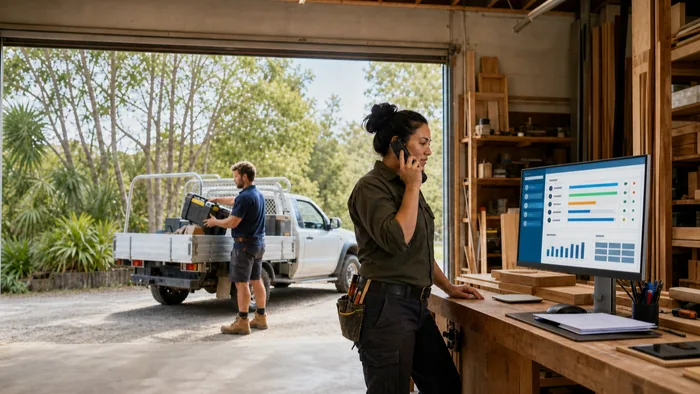
For a trade business the phone is the whole front door, and it rings while you are up a ladder with both hands full. This page is about what happens to that call, because the caller is already looking at the next name on the list.
You cannot answer, and the caller will not wait
Somebody with a burst pipe or no power is rarely shopping around carefully. They tend to work down a list of numbers and stop at the first one that answers.
That is the whole economics of a trade phone. A missed call is not a call you can return later at your convenience, it is a job that went to somebody else while you were on the tools.
And the calls arrive at exactly the times you cannot take them, because the hours you are working are the hours people ring tradespeople.
One number that follows the work
The usual setup in a small trade business is a mobile number on the van and the ute, and that number is a person rather than a business.
It works until any of these happens, and all of them eventually do.
- You take on somebody, and there is no way to send them a call
- You have a day off, and the business is shut because your phone is
- You want to sell the business, and the number that every customer has is your personal one
A business number fixes all three without changing what a customer dials. It can ring your mobile first and somebody else second, ring two phones at once, or go to a message that actually says something. The number belongs to the business rather than to a handset.
The office that is a ute
Most trade businesses have no office, and the advice written for businesses that do mostly does not apply. There is no reception, nobody sitting at a desk, and no comms cupboard to put anything in.
That makes a hosted system the obvious shape rather than a debatable one. There is no phone system to install in a building you do not have, the phones can be the mobiles people already carry, and adding somebody is a setting rather than a visit.
What that means in practice, and what it costs you in dependence on your internet connection, is on our hosted PBX page.
Handsets that go where the work is
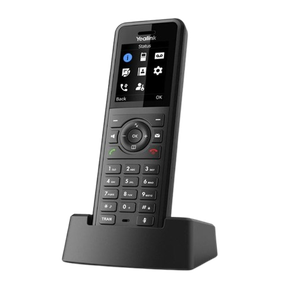
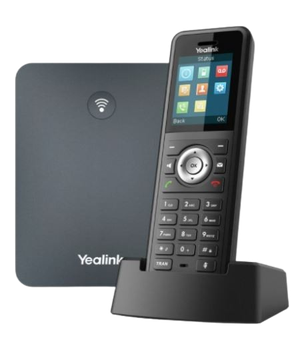
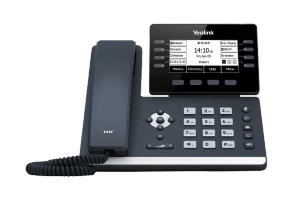
A rugged cordless for the workshop and the yard, a second for whoever is on the tools, and a desk phone for the office when there is one. Prices exclude GST.
Quoting, scheduling and the call you meant to return
The second most expensive thing after a missed call is a returned call that never happened. Somebody rang at eleven, you were under a house, and by four you had forgotten.
- Missed calls listed somewhere you will see them, rather than in a notification you swiped away
- Voicemail that arrives as an email or a text, so it can be read on site without ringing a mailbox
- A record of who rang and when, so a quote follow up is not a memory test
None of that is sophisticated. It is the difference between a business that follows up and one that means to.
After hours, and deciding what you actually want
Trades get after hours calls whether or not they offer after hours work, and the two useful positions are opposite ones.
If you do emergency work, that call is the most valuable one you get all week and it should reach you or whoever is on. If you do not, the best outcome is a message that says so plainly and tells them when you open, so you are not woken and they are not left waiting for a callback that is not coming.
What costs you is the middle: a phone that rings out with no message, which annoys the caller and gets you nothing.
Growing past the point where one mobile works
The moment this matters is the third or fourth person. Up to two, everyone answers their own phone and it is fine. After that, customers do not know who to ring, calls get repeated, and jobs get double booked or missed between people.
One number with calls distributed behind it is the change that makes a small trade business feel organised to a customer, and it is usually the cheapest part of getting there.
What we do, and what we are not
We are VoIP System, an independent phone systems company working right across Australia. We set up business phone numbers and systems, and we support them afterwards.
We are not going to sell a two person trade business a phone room. Most trades need one number, sensible rules behind it and nothing else, and we will say so rather than quoting for more.
We are not one of the manufacturers whose equipment we install, and we are not a partner, reseller or authorised agent of any of them.
Talk to us about your business
Tell us how many of you there are, whether anyone is answering phones in an office, and what happens to a call while you are on a job. That is enough for us to say what is worth doing and what is not.
Call 1300 865 879, or send us the details and we will come back to you.
Common questions
- Do we need handsets if nobody sits in an office?
- No. For most trade businesses the phones are the mobiles everyone already carries, running the system as an app. Desk handsets only start to make sense once somebody is sitting somewhere answering calls for everyone else.
- Can we keep the mobile number that is on the van?
- In most cases the number can be ported across, and it is worth asking about early because it is the number on your signage, your vehicles and every job you have ever done. Tell us who it is with now and we will tell you what is involved.
- What happens to a call while we are on the tools?
- Whatever you decide, which is the point. It can ring a second person, go to a message that says when you will call back, or reach whoever is on call. What you do not want is the default, which is a phone that rings out and tells the caller nothing.
- We are only two people. Is this overkill?
- At two it is usually about not losing calls rather than about routing them, so the sensible version is small: one business number, a fallback to the second phone, and a message worth hearing. The point where it changes is the third or fourth person, when customers stop knowing who to ring.
- Can we tell how many jobs we are missing?
- Yes, and it is often the reason people change. The system reports calls received, answered and missed, with the times. Most trade businesses find the number of unanswered calls during working hours higher than they would have guessed.