
VoIP compared with a traditional phone line
Planning a new system or switching provider?

For most Australian businesses this decision has largely been made already, because the copper services the old phone lines ran on have been progressively switched off across the NBN fixed line footprint. What is left is a narrower and more useful question: what actually changes, what the old arrangement did better, and what to do about the equipment still plugged into a line.
The choice that mostly is not one any more
For decades a business phone line was a physical pair of copper wires into the building, and the phone company owned everything on the far side of the wall socket. Across the NBN fixed line footprint those services have largely been disconnected, area by area, over several years.
So for most businesses the question is no longer whether to move off a traditional line, but what to move to and what to do with the things that were quietly relying on the old one. There are exceptions, including some special services and some premises outside the fixed line footprint, and if you think you are one it is worth checking rather than assuming.
What the changeover involves, and what happens to a PABX you already own, is on our NBN phone systems page rather than repeated here.
What actually changes when calls move to the internet
- The system stops being a box in a cupboard and can run somewhere else entirely
- A handset becomes a device on the network, so it works the same at a second site or at somebody’s home
- Adding a line stops being a phone company visit and becomes a setting
- Calls between your own handsets and sites stop being calls at all, because they never leave the system
- The fault you ring about changes, because the phone system, the internet service and your own network are now three suppliers
That last one is the honest cost of the move and it is rarely mentioned. On a copper line a crackle was one company’s problem. Now it can sit in any of three places, and working out which is a skill rather than a phone call.
What a traditional line still does better
A comparison page that cannot answer this is not worth reading, so here it is.
- An analogue copper service could keep working in a blackout, because the line itself carried the power, though that only helped if the handset was a corded one rather than a cordless base that needed the mains. Nothing over the internet does that without a battery somewhere
- It does not depend on your internet connection being up, or being any good
- It has no configuration to get wrong. It rings, and somebody answers it
- It is simpler to reason about when something breaks, because there is only one supplier to ring
Those are real advantages and they are the reason the change felt like a downgrade to a lot of businesses. The answer to the first two is a fallback you set up on purpose, usually calls diverting to mobiles when the connection drops, rather than pretending the problem does not exist. It has to be configured and tested, it is not something that happens on its own.

The things still plugged into an old line
This is the part that catches businesses out, because none of it is a phone and nobody thinks about it until it stops.
- A lift emergency phone, which is often on its own line and is not something to discover after the changeover
- A back to base alarm dialler
- A fax machine, which is rarer than it was and not gone
- An EFTPOS terminal on a dial up backup
- A gate intercom or a door phone
Each of these has an answer, and the answers differ. Some move onto a gateway that presents them with something that behaves like the old line. Some are better replaced with a device that uses the internet directly. For a lift phone, a fire panel or a monitored alarm, check with whoever maintains the equipment before anything changes, because they are the people who know what that device needs.
Gateways for exactly this are covered on our Grandstream page.
Cloud PBX, hosted, VoIP: the words people mix up
These get used as though they mean the same thing and they do not, which makes comparing two quotes harder than it should be.
| Word | What it actually describes |
|---|---|
| VoIP | What it actually describesHow the call travels. Over the internet rather than a dedicated line |
| PBX | What it actually describesThe system that decides which phone rings. You can have one anywhere |
| On premise PBX | What it actually describesThat system, as hardware in your building, which you own |
| Cloud or hosted PBX | What it actually describesThat same system, running in a data centre, rented |
| SIP trunk | What it actually describesThe connection that carries calls in and out of a PBX you own |
So cloud PBX against VoIP is not a real comparison, because a cloud PBX is one way of doing VoIP. The genuine choice is whether the system lives in your building or somewhere else, and the words above are three different ways of asking that.
That choice, set out properly, is on our hosted PBX page, and there is a longer comparison in our guide to cloud PBX against traditional phone systems.
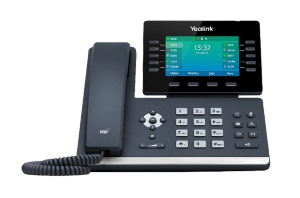
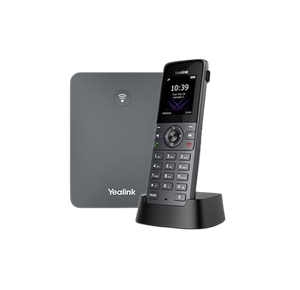
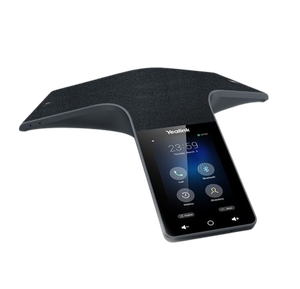
What replaces the phone on the wall
The same desk, the same number, different hardware underneath. Prices exclude GST.
What we do, and what we are not
We are VoIP System. We are an independent Australian phone systems company, and moving businesses off old lines onto something that suits them is a large part of what we do.
We are not one of the manufacturers whose equipment we install, and we are not a partner, reseller or authorised agent of any of them.
If what you have is working and nothing is forcing a change, that is a legitimate position and we will say so. The reasons to move are usually that the service underneath you is ending, that you need something the old system cannot do, or that you are paying rental on lines that carry nothing.
Talk to us about what you have now
Have a recent bill in front of you and a rough idea of what is plugged in besides the phones. That second part is the one most people have not thought about, and it is usually where the surprises are.
Call 1300 865 879, or send us the details and we will come back to you.
Common questions
- Can we just keep our old phone line?
- In most places that decision has largely been made for you, because the copper services those lines ran on have been progressively disconnected across the NBN fixed line footprint. The practical question now is usually what to move to, and what to do about anything besides the phones that was using the line.
- What happens to our phones in a power cut?
- An analogue copper service carried its own power, so a corded handset could keep working in a blackout. A cordless base plugged into the mains could not. Nothing over the internet does it on its own, so the answer is a fallback you configure rather than a claim that it does not matter: calls can be set to divert to mobiles when the connection drops, and it is worth setting up and testing on the first day.
- What is the difference between cloud PBX and VoIP?
- They are not alternatives. VoIP describes how the call travels, over the internet rather than a dedicated line. A PBX is the system that decides which phone rings, and a cloud or hosted PBX is that system running in a data centre rather than in your building. So a cloud PBX is one way of doing VoIP.
- What about our lift phone and our alarm?
- They need handling deliberately, and they are the most commonly forgotten part of a changeover. Some move onto a gateway that gives them something behaving like the old line, and some are better replaced with a device that uses the internet directly. For a lift phone or a monitored alarm, check with whoever maintains it before anything changes rather than after.
- Will call quality be worse?
- It should not be, and a call uses very little of a connection. What changes is that quality now depends on your internet service and your own network as well as on the phone system, so when something does sound wrong there are three places to look instead of one.